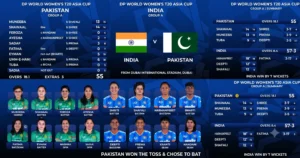
India vs Pakistan Women’s Asia Cup 2026
There are cricket matches, and then there are India vs Pakistan matches The difference is difficult to explain unless you have felt the atmosphere yourself. Whenever these two teams walk onto the same field, emotions rise like a powerful wave. Fans forget ordinary matches, ordinary statistics, and sometimes even the tournament table. Suddenly, every ball feels important, every wicket creates noise, and every boundary can change the mood of millions of supporters. That was exactly the atmosphere surrounding the India vs Pakistan clash in the **2026 Women’s Asia Cup in Dubai.
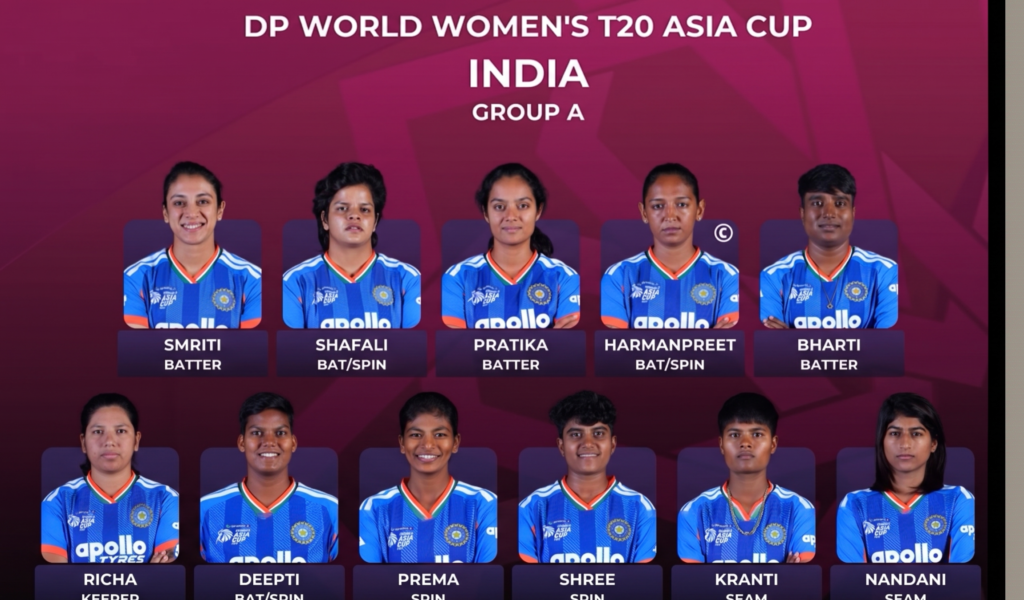
This Group A encounter was not just another fixture. India had already built momentum in the tournament, while Pakistan arrived knowing that a victory against their biggest rivals could completely change the mood of their campaign. Pakistan won the toss and chose to bat first, hoping to post a competitive score and place India under scoreboard pressure. Instead, what followed became one of the most dramatic collapses in the recent history of Pakistan women’s T20 cricket.
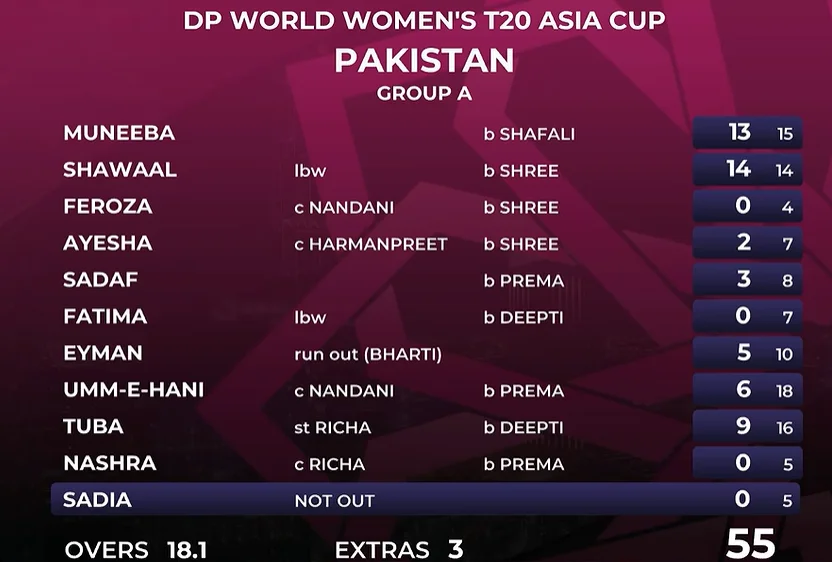
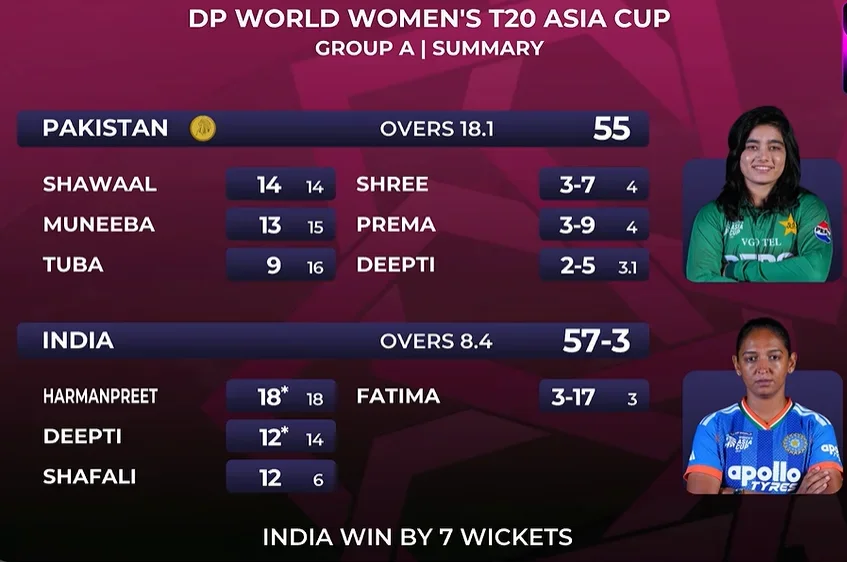
Pakistan were eventually bowled out for only *55 runs in 18.1 overs**, their lowest-ever total in Women’s T20 International cricket. India then chased the target in just *8.4 overs**, winning by seven wickets and leaving *68 balls unused**. The Indian spin attack completely dominated the contest, with *Shree Charani taking 3 wickets for 7 runs*, while **Prema Rawat claimed 3 for 9** and **Deepti Sharma picked up 2 for 5*.
Why India vs Pakistan Is Always More Than Just Cricket
The scoreboard can tell you who scored the most runs and who took the most wickets, but it can never fully describe an India vs Pakistan match. These encounters carry history, emotion, expectation, and intense pressure. A player may have played hundreds of matches, but the feeling of facing the rival team can still be completely different. The crowd watches every movement, social media reacts instantly, and one mistake can become the centre of discussion for hours.
For the players, however, the biggest challenge is controlling emotions. Cricket requires concentration, patience, and clear decision-making. Rivalry, on the other hand, brings adrenaline. The team that manages to remain calm often gains the advantage. India did exactly that in Dubai. While Pakistan showed early attacking intent, India slowly absorbed the pressure, waited for opportunities, and then struck with ruthless precision.
The match also highlighted how modern women’s cricket has evolved. These games are no longer treated as secondary events. Millions of fans follow the players, analyse tactics, and celebrate records. The intensity surrounding India and Pakistan women’s cricket is growing rapidly, and this match demonstrated why. From the opening delivery to Harmanpreet Kaur’s finishing shot, the contest had emotion, drama, individual brilliance, and a complete shift in momentum.
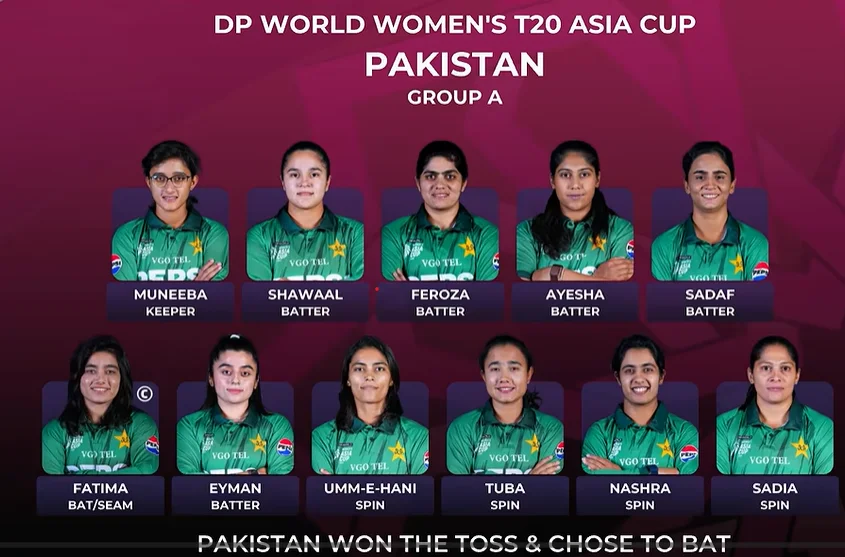
Pakistan Wins the Toss and Chooses to Bat
When Pakistan captain **Fatima Sana** won the toss and chose to bat first, the decision appeared logical. In a high-pressure match, putting runs on the board can often help a team. A competitive total gives bowlers something to defend and creates uncertainty for the chasing side. Pakistan wanted to establish a solid opening partnership, survive the early overs, and then increase the scoring rate.
The opening pair of **Muneeba Ali and Shawaal Zulfiqar** began with positive intent. They found gaps and attempted to keep the scoreboard moving. For a brief period, Pakistan looked comfortable. India introduced different bowling options, but Pakistan’s openers showed enough confidence to suggest that the innings could develop into something competitive.
At one stage, Pakistan reached **27 without losing a wicket**. The Indian bowlers had not yet found the breakthrough, and Pakistan seemed ready to build a platform. But cricket can change in one over. Sometimes a single wicket does not just remove a batter; it changes the entire psychological balance of the match.
That is exactly what happened next.
The First Breakthrough Changes Everything
India needed someone to break the partnership, and the breakthrough came through an unexpected source. **Shafali Verma**, known primarily for her explosive batting, delivered an important wicket with the ball. She dismissed Muneeba Ali, ending the opening partnership and opening the door for India’s bowlers.
Muneeba had contributed 13 runs and had tried to give Pakistan stability at the top of the order. But once she walked back to the pavilion, the atmosphere began to change. The Indian fielders became more energetic. The bowlers sensed an opportunity. Pakistan’s next batters now had to begin their innings against an attack that was becoming increasingly confident.
This is where India showed one of its greatest strengths. The team did not simply celebrate the wicket and relax. Instead, the bowlers increased the pressure immediately. They attacked the stumps, changed the pace, and made it difficult for Pakistan’s middle order to settle.
The collapse had begun.
Shree Charani’s Spin Web Begins
If there was one bowler who represented India’s dominance in this match, it was **Shree Charani**. Her spell was disciplined, intelligent, and devastating. Pakistan’s batters struggled to understand the variations, the flight, and the control she brought to the contest.
Charani removed **Shawaal Zulfiqar**, who had been Pakistan’s highest scorer with 14 runs. She then dismissed **Gull Feroza for a duck** and also accounted for **Ayesha Zafar**. Suddenly, Pakistan’s promising start had disappeared.
Her final figures of **3 wickets for just 7 runs in four overs** reflected remarkable control. In T20 cricket, where bowlers are often attacked from the beginning, conceding only seven runs in four overs is an extraordinary achievement. Charani did not allow the Pakistani batters to release the pressure. Every delivery seemed to ask a difficult question.
According to post-match reporting, the Indian spin unit had discussed their plans together and focused on executing them as a group. That preparation became visible on the field as Pakistan struggled to find a safe scoring option.
Prema Rawat Adds More Pressure
While Charani created the damage, **Prema Rawat** made sure Pakistan could not recover. The young spinner delivered a sensational performance, taking **three wickets for only nine runs**. Every time Pakistan seemed to search for a way back into the innings, another wicket fell.
Sadaf Shamas was dismissed, followed by more middle-order resistance disappearing under pressure. Pakistan’s batters were trying to attack, but they could not find the balance between aggression and control. Some shots were played across the line, while others came from players who were simply unable to settle against India’s spinning attack.
The Pakistan innings began to resemble a house losing its foundation. The opening partnership had given the team something to stand on, but once the first few wickets fell, everything else collapsed quickly. Partnerships are essential in cricket, especially when conditions are difficult. Pakistan could not build one.
India’s fielding also contributed to the pressure. The players remained alert, attacked the ball, and refused to give Pakistan easy runs. A run-out and sharp work behind the stumps added to the sense that everything was going India’s way.
Prema Rawat’s performance was especially impressive because she did not try to do anything extraordinary. She simply bowled in the right areas, trusted her skills, and allowed pressure to create mistakes.
Read this too:-The Final Day in Galle: Sri Lanka Fought Back, but India Sealed a Historic Victory : Sri lanka vs India
Deepti Sharma Tightens India’s Grip
When Pakistan needed experience, India turned to one of the most reliable names in women’s cricket: **Deepti Sharma**. Her spell was another example of calm, controlled bowling. She attacked the stumps and gave Pakistan’s batters almost no room.
Deepti dismissed Pakistan captain **Fatima Sana for a duck**, a crucial moment in the innings. The captain was expected to guide the lower order and help Pakistan reach a respectable total. Instead, she became another victim of India’s spin domination.
Deepti finished with **2 wickets for 5 runs in 3.1 overs**, an exceptional return in a T20 match. Her economy rate reflected how difficult it was for Pakistan to score against India’s bowlers.
Pakistan continued losing wickets. The scoreboard moved slowly, but the wickets kept falling. The team had reached a point where survival became more important than scoring. Unfortunately for Pakistan, even survival became difficult.
Pakistan Bowled Out for a Record-Low 55*
The final wicket confirmed a historic and unwanted record. Pakistan were bowled out for **55 runs in 18.1 overs**, making it their lowest-ever total in Women’s T20 International cricket.
The statistic became even more dramatic when compared with their previous lowest score. Pakistan had previously been dismissed for 56 against New Zealand in 2024. The total of 55 against India therefore represented a new low in their T20I history.
The most remarkable aspect of the collapse was the contrast between the beginning and the end. Pakistan had reached 27 without losing a wicket. From that point, the Indian bowling attack completely took control. The pitch offered enough assistance for spin, but India’s success was not only about conditions. It was about discipline, planning, and execution.
For India, the innings was almost perfect. Charani took three wickets. Prema Rawat took three. Deepti Sharma took two. Shafali Verma added a wicket. Pakistan’s batting lineup simply could not find an answer.
The target was now only 56 runs*
The question was no longer whether India could chase the total. The real question was how quickly they would finish the job.
India Begins the Chase With Fearless Intent
If Pakistan hoped for a miracle, **Shafali Verma** quickly made their task even more difficult. The Indian opener began the chase with fearless intent, attacking from the very beginning.
Shafali also reached a major personal milestone during the match, crossing **3,000 runs in Women’s T20 Internationals**. Reports described her as becoming the youngest and fastest batter to reach the landmark.
Her approach represented India’s confidence. When chasing only 56 runs, a cautious start could have been understandable. But Shafali attacked. India wanted to finish quickly and send a clear message.
Pakistan captain Fatima Sana did create some excitement by taking three wickets. Shafali was dismissed, followed by Smriti Mandhana and Pratika Rawal. For a few moments, Pakistan supporters had something to cheer about.
But the target was simply too small.
Harmanpreet Kaur Takes Control
With wickets falling, India captain **Harmanpreet Kaur** walked into the middle with responsibility. She did not panic. She understood the situation perfectly.
The Indian captain remained unbeaten on **18 runs**, while Deepti Sharma supported the chase with an unbeaten 12. India did not need a spectacular recovery because the required total was so small, but Harmanpreet ensured there would be no unnecessary drama.
Then came the finishing moment.
Harmanpreet used her feet, reached the pitch of the ball, and launched it for a six. It was the kind of captain’s finish that supporters love to see. India reached **57 for 3 in 8.4 overs**, winning by seven wickets with 68 balls remaining.
What This Victory Means for India
This victory was much more than two points in a group-stage match. India remained unbeaten, finished strongly in Group A, and reinforced the strength of their bowling unit. The performance also showed that India’s younger players are capable of performing under intense pressure.
Shree Charani’s spell was a major highlight, while Prema Rawat demonstrated that India’s spin resources continue to grow. Deepti Sharma once again provided the experience and control expected from a senior player.
For Pakistan, the defeat will require serious reflection. The team started positively but lost control once the first wicket fell. Their biggest challenge will be finding a way to build partnerships and prevent collapses when the opposition gains momentum.
Yet that is the beauty of sport. One match does not define an entire tournament. Pakistan will have opportunities to respond, while India will need to maintain its standards.
Conclusion
The India vs Pakistan Women’s Asia Cup 2026 match in Dubai began with enormous emotion and expectation, but it ended as a demonstration of Indian dominance.Pakistan won the toss and chose to bat. Their openers began positively. For a brief moment, the match appeared balanced. Then India found one breakthrough, and everything changed.
Pakistan collapsed from a promising position to **55 all out**, their lowest-ever Women’s T20I total. India’s spin attack controlled the match with extraordinary precision, led by Shree Charani’s outstanding spell of **3 for 7** and Prema Rawat’s **3 for 9**.
India then chased the target with confidence. Despite three wickets from Fatima Sana, the result was never seriously in doubt. Harmanpreet Kaur finished the contest with authority, sealing a seven-wicket victory.
For Indian supporters, it was a night of celebration. For Pakistan, it was a difficult night that will demand answers. And for cricket fans, it was another reminder that when India and Pakistan meet, even a one-sided scorecard can contain drama, emotion, pressure, and unforgettable moments.
